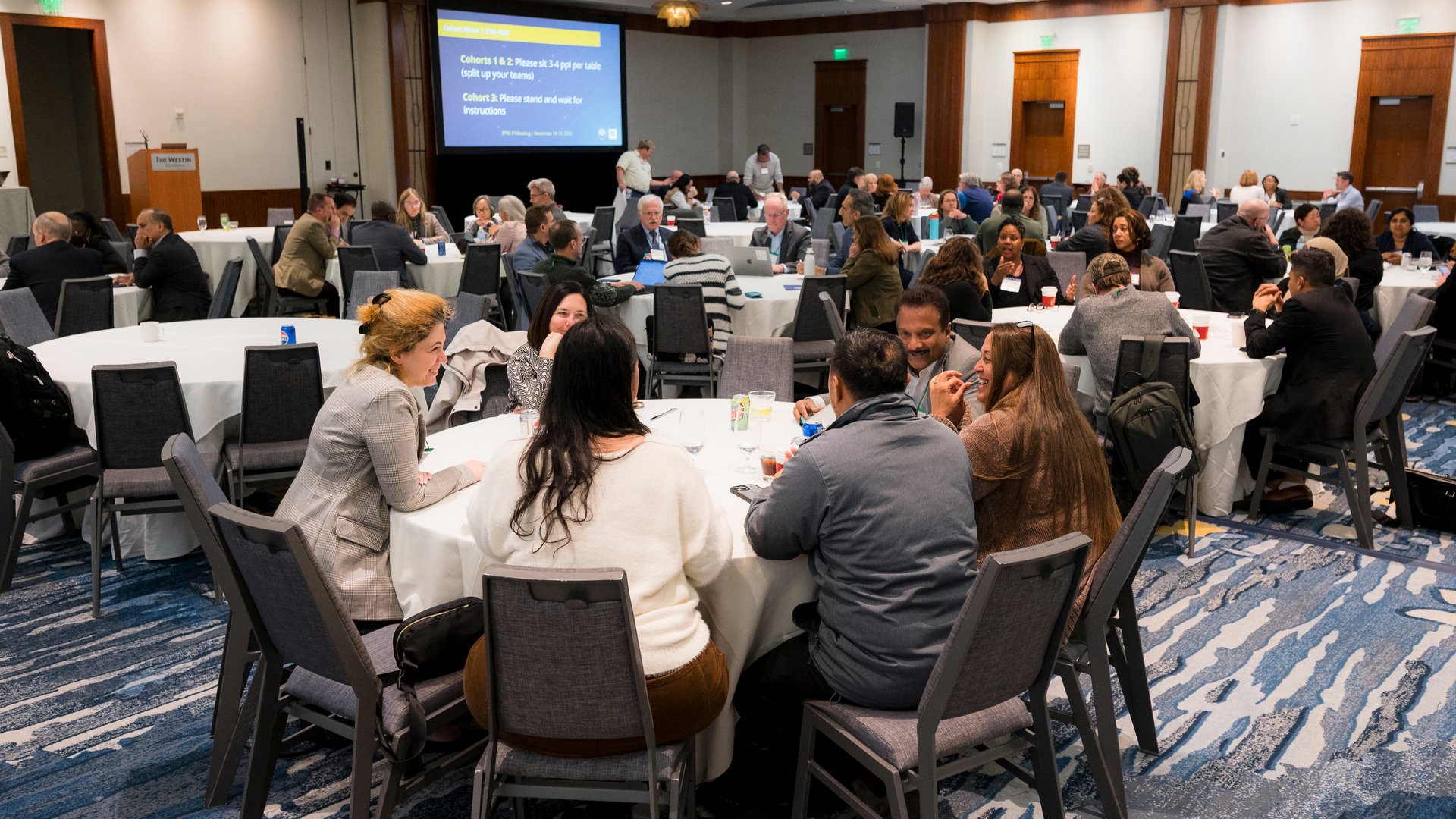
A recent Connect Four meeting offered a closer look at one of the most important pieces of the EPIIC project’s long-term vision: the EPIIC Faculty Fellows model.
The Connect Four project—four institutional partners working together through the EPIIC grant—holds monthly meetings for project leaders. Recently, the group expanded one of those sessions into a two-hour faculty fellows meeting, inviting fellows from all four campuses to share their work directly with one another. The result was a productive exchange of strategies, lessons learned, and emerging ideas for strengthening industry partnerships across institutions.
At each campus, EPIIC Faculty Fellows serve as a frontline bridge between the college and its industry and community partners. Their work takes many forms, including supporting industry-connected courses, helping students access internships and job shadowing opportunities, developing professional experiences, and cultivating relationships with employers and community partners. While the structure varies by campus, the purpose is the same: to develop the people and processes needed to make partnership work sustainable.
That goal is central to why the faculty fellow position was created in the first place. Project leaders described the role as a key piece of institutional infrastructure—one that helps campuses build capacity beyond the grant itself. Faculty fellows bring disciplinary expertise, student-facing experience, and hands-on partnership work into a formal role that can grow over time. In the long run, the hope is that these fellows will not only help manage partnerships, but increasingly secure and cultivate them as well.
The meeting, the first in what is expected to become a regular series, highlighted several roles faculty fellows are already playing across the cohort. They serve as relationship-builders with industry partners, help translate partnerships into concrete student opportunities, and connect employers, faculty, and students in ways that make collaborations more effective. They also share tactics and problem-solving strategies with peers at other campuses and, in many cases, are helping define what partnership development should look like at their own institutions.
“We could all hear a little bit more about what's happening from the faculty and staff that are doing the work and that allowed opportunities for meeting attendees to ask questions,” says Vicki Baker, Associate Dean of Strategic Partnerships & Innovation at Albion College. “‘How did you do that,’ or ‘how did that connection work?,’ ‘or what strategy you're using?’ Because maybe we’re struggling a little bit with getting bigger companies to realize the value of partnering with us. So, it was a really productive meeting.”
One of the strongest takeaways from the session was that the model is both shared and flexible. All four institutions independently identified the need for this kind of role early in the proposal process, even before “faculty fellow” became the common term. Since then, each campus has adapted the position to fit its own context.
“Faculty fellows aren’t all doing the same kind of partnership work, and yet it’s worked really well,” says Travis Tangen, an external evaluator for the project. “It was very important for them to see those different layers of partnership possibilities at their peer institutions.” In fact, that variation gave the meeting added value: Fellows could see not just shared challenges, but different ways of approaching them.
The conversation also surfaced practical lessons for the broader EPIIC community. Participants discussed the importance of being strategic about partnership development, especially for smaller institutions. While large corporate partners can be valuable, several attendees noted that small businesses may be a particularly strong fit. Smaller institutions often understand resource-constrained environments in ways that align naturally with small business needs, opening the door to partnerships that are both realistic and high-impact.
Beyond strategy, the meeting underscored the value of connection. For many faculty fellows, there may be few—or no—people on their own campus doing similar work. Meeting peers from other institutions created space for direct exchange, mutual support, and a growing sense of camaraderie. That kind of human network may prove just as important as the formal structures being built.
For the EPIIC community, the message is clear: Faculty Fellows are becoming a vital part of how institutions build and sustain industry partnerships. “We’ve done some really good work in this amount of time, and we see the momentum moving forward and the possibility,” says Baker. “It was a good opportunity to engage in a knowledge exchange as well as to appreciate each other and appreciate the work that’s been done so far.”