The University of Texas Permian Basin is expanding its work under the EPIIC ARISE project through a new “Lightning Talks” research series designed to strengthen faculty engagement, interdisciplinary collaboration, and regional innovation.
UTPB joined Cohort 3 of the EPIIC ARISE initiative after receiving funding in October 2025. The ARISE effort, short for Advancing Regional Innovation Through Sustainable Engagement, brings together Primarily Undergraduate Institutions focused on building institutional capacity for workforce development and industry-driven research and development. Its mission centers on aligning university research expertise with regional industry needs and improving the ability of institutions to work with government and industry partners “at the speed of business.”
At UTPB, the ARISE leadership team includes Brian Shedd, executive director of the Office of Innovation and Commercialization; Rajalingam Dakshinamurthy, provost and senior vice president for academic affairs; and Seyed Ghiaasiaan, assistant professor of mechanical engineering and ARISE PI. Their work supports both external partnership-building and faculty engagement within the College of Engineering and Sciences.
As part of that effort, the college recently launched “Lightning Talks,” a new initiative coordinated by Ghiaasiaan. The program gives faculty a forum for short, focused presentations on research questions, teaching innovations, and collaborative projects. Each session features three speakers, 10-minute presentations, a focus on a single research question or project, five minutes of discussion per talk, and a maximum of five presentation slides. The series will rotate monthly between UTPB’s Midland and Odessa campuses.
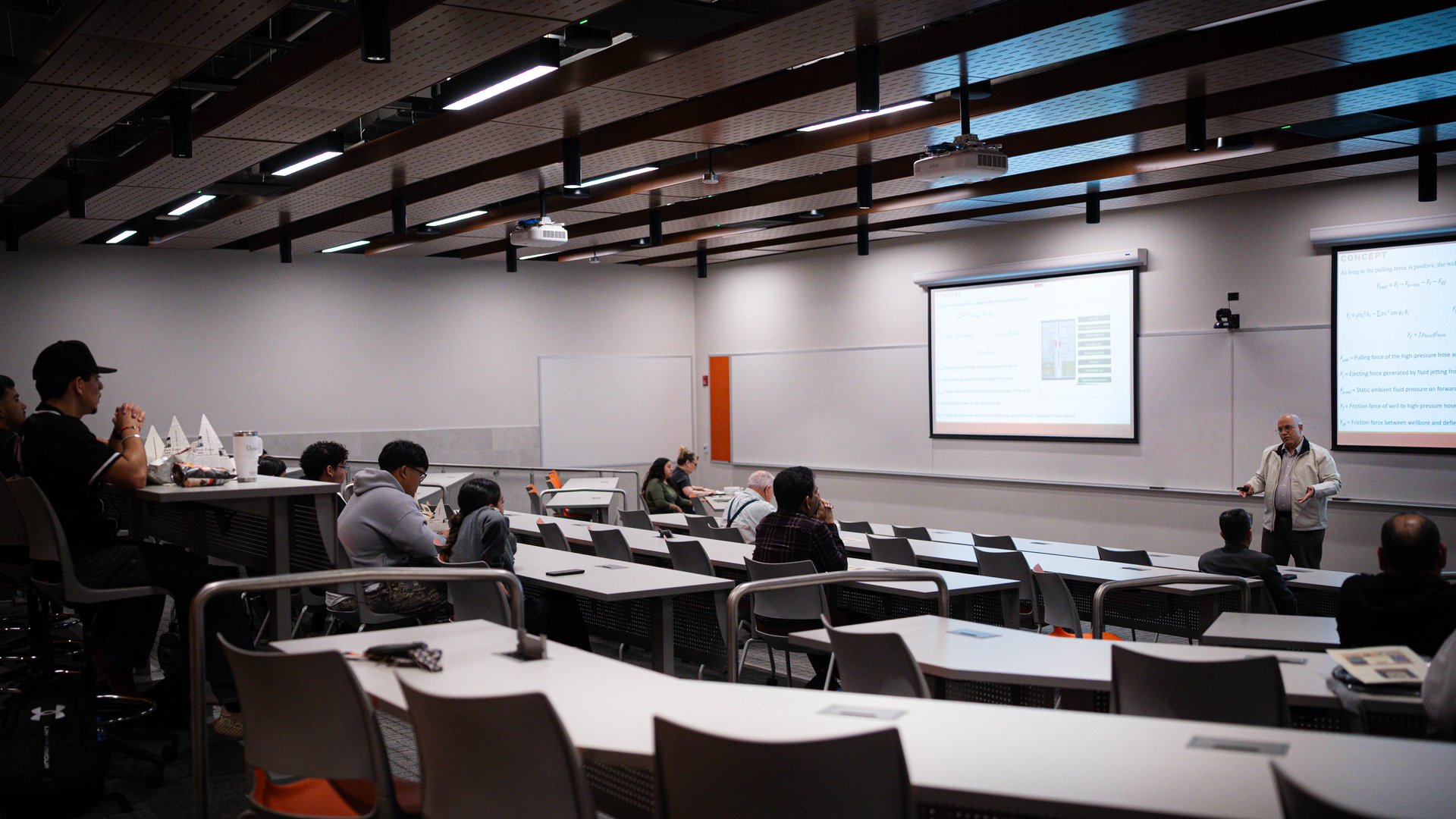
The inaugural session was held February 24, 2026, in the Engineering Building Lecture Hall on the Midland campus and drew 25 participants, including 15 faculty members and 10 students. Presenters included Ahmed Kamel, professor and chair of chemical and petroleum engineering, speaking on “Radial Jet Drilling (RJD): Cost Effective Frackless Production for Marginal Fields”; Omar A. Beg, associate professor and chair of computer science and electrical engineering, presenting “Resilient Secondary Defense of AC Micro-grids Under Energy-Unbounded Cyber Attacks”; and Brian Flowers, assistant professor and program coordinator of chemical engineering, discussing “Ionic Liquids: A Desalination Pretreatment.”
The event sparked discussion across disciplines and highlighted interest in new collaborative research opportunities. Students also had the opportunity to engage with a range of research directions across engineering and science fields.
The second “Lightning Talks” session took place on March 24 on the Odessa campus. Along with efforts such as the Faculty/Staff Partnering Capacity Assessment, the new series reflects UTPB’s broader role in advancing the goals of NSF EPIIC ARISE by strengthening institutional capacity, encouraging interdisciplinary engagement, and supporting regional innovation and workforce development.